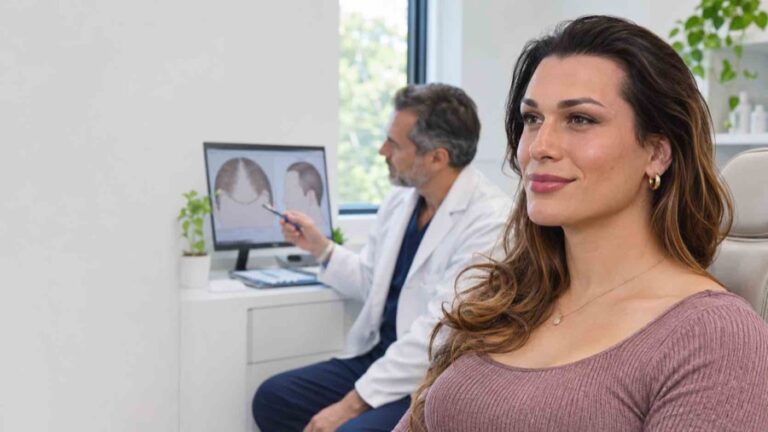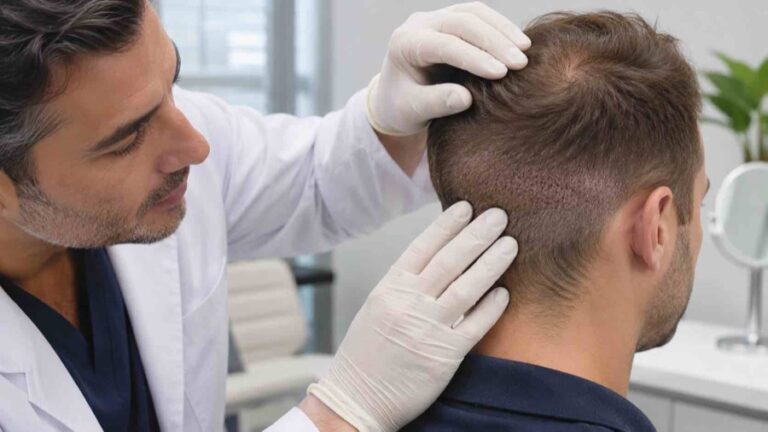


Hair transplant pain management begins before the procedure and continues through the first days of healing. A calm preparation, gentle scalp care, and a clear recovery routine can make discomfort easier to understand and easier to control.
Most patients describe pressure, tightness, tenderness, or a burning sensation rather than severe pain. Knowing when these feelings are expected helps separate ordinary recovery from symptoms that deserve a closer review.
What Does Hair Transplant Pain Usually Feel Like?
During a hair transplant, local anaesthesia numbs the donor and recipient areas. Patients may notice brief stinging during the injections, followed by pressure, movement, or pulling as grafts are collected and placed. The scalp can feel stretched because the procedure lasts for several hours, yet sharp pain should not be the dominant sensation once the anaesthetic is working.
After the procedure, discomfort often feels different in each area. The donor zone may feel tender or bruised, while the recipient area can feel tight, warm, or mildly itchy. These sensations tend to change as the local anaesthetic wears off and the skin begins repairing itself.
How Does Local Anaesthesia Reduce Discomfort?
Local anaesthesia blocks pain signals in the scalp while the patient remains awake. It allows the surgical team to extract and implant follicles without creating continuous pain during the main stages. The injections can be the most noticeable part of the anaesthetic process, especially around sensitive areas such as the hairline.
Once numbness develops, the scalp may still register touch and pressure. This is normal and does not necessarily mean the anaesthesia has failed. Explaining the difference between pressure and pain helps patients communicate more clearly during the session.
- Brief stinging can occur during the initial injections.
- Pressure may be felt while grafts are handled.
- Position changes can reduce neck and back discomfort during a long session.
- Additional anaesthetic can be discussed if sharp pain appears.
What Can Be Done Before Surgery To Improve Comfort?
Preparation influences the first days of recovery. A good night of sleep, a light meal if permitted, comfortable clothing, and an organised travel plan reduce physical strain. Clothing that opens at the front is easier to remove without rubbing the grafts after surgery.
Patients should also review their medication and supplement routine in advance. Some products can affect bleeding or interact with prescribed medicines. The preparation guidance on what to do before a hair transplant can help organise practical details such as washing, arrival time, and clothing.
Why Does Pain Sometimes Increase At Night?
Discomfort may feel stronger at night because there are fewer distractions and the scalp can become more congested when the head is positioned flat. Swelling may also become more noticeable during the first evenings. Resting with the head elevated can reduce pressure and make sleep more comfortable.
A quiet room, loose bedding, and a stable sleeping position are useful during this stage. Turning onto the grafts or pressing the donor area against a firm pillow can increase tenderness, so support should be arranged without creating direct friction.
Which Position Helps After A Hair Transplant?
Keeping the upper body slightly elevated during the early nights can reduce swelling around the forehead and protect the recipient area from unnecessary contact. Some patients use extra pillows or a travel cushion to keep the neck supported while avoiding pressure on the back of the scalp.
- Raise the head and upper back rather than bending the neck sharply.
- Keep the grafted area away from direct pillow pressure.
- Use clean, soft fabric that does not catch on crusts.
- Change position slowly to avoid sudden pulling sensations.
The aim is not to remain rigid. Comfortable support is more helpful than forcing the body into an unnatural position for the entire night.
How Are Pain Relievers Used During Recovery?
Pain relievers are used to reduce discomfort while the scalp heals. The important point is to follow the prescribed schedule and avoid adding products without checking how they fit with the rest of the recovery plan. Taking more than recommended does not make the scalp heal faster and can create unnecessary risks.
Discomfort is often easier to manage when medication is taken according to the planned timing rather than waiting until pain becomes intense. A written schedule can prevent missed doses, especially during the first night when sleep is interrupted.
Can Cold Compresses Help With Swelling And Tenderness?
Cool compresses can soothe the forehead and areas around the eyes when mild swelling appears. They should not be placed directly on fresh grafts or pressed against the recipient area. A clean cloth wrapped around a cool pack offers a softer barrier and reduces the chance of excessive cold exposure.
Short applications are more appropriate than leaving a cold pack in place for a long time. The skin should remain comfortable, and the compress should be removed if numbness, intense cold, or colour changes occur.
Why Can The Donor Area Feel More Sore Than The Front?
The donor area receives many small extraction points, so it can feel tender when the anaesthetic wears off. Patients may notice a bruised sensation, tightness, or sensitivity while resting the head against a surface. The discomfort usually becomes less noticeable as the small openings close.
Gentle washing and avoiding friction help the donor skin settle. Tight hats, rough towels, and scratching can prolong irritation. The donor area should be handled as healing skin rather than treated like an ordinary haircut for the first days.
What Helps With Itching Without Disturbing Grafts?
Itching often appears as crusts dry and the skin begins to repair itself. Scratching can dislodge crusts too early, irritate the follicles, and increase the chance of bleeding. Keeping the nails short and following the recommended washing routine reduces the temptation to touch the scalp.
- Use gentle cleansing instead of rubbing the area.
- Keep fingers away from crusts and scabs.
- Choose loose clothing that does not brush the scalp.
- Contact the clinic if itching becomes intense or is accompanied by spreading redness.
Itchiness is not automatically a sign of a problem, but a sudden change combined with warmth, discharge, or worsening pain should not be ignored.
How Does Washing Affect Pain Levels?
The first washes can feel unfamiliar because the scalp is sensitive and the grafts need protection. Lukewarm water and light fingertip contact are generally more comfortable than strong water pressure or vigorous shampooing. A soft approach cleans the skin while avoiding unnecessary pulling on crusts.
Allowing the scalp to dry gently also matters. Rubbing with a towel can create friction across both the donor and recipient zones. Many patients find that careful washing reduces tightness once dried secretions and excess oil have been removed.
Can Swelling Create A Feeling Of Pressure?
Mild swelling can travel from the scalp toward the forehead during the first few days. This may create a feeling of pressure around the brow or upper eyelids. The sensation can look dramatic while remaining part of ordinary postoperative recovery.
Head elevation, calm activity, and the recommended care routine can help the swelling settle. Pressing or massaging the swollen area is not a useful shortcut because it can irritate delicate skin and disturb healing.
Which Activities Can Increase Discomfort?
Intense exercise, heavy lifting, excessive sweating, and direct sun exposure can make the scalp feel hotter and more tender during the early stage. Bending forward for long periods may also increase throbbing or pressure. A quieter routine gives the small wounds time to close.
Patients can still walk gently and move around the room. The distinction is between light circulation and activities that raise body heat, blood pressure, or friction across the scalp.
How Can Travel Be Made More Comfortable?
Travelling soon after a transplant requires practical planning. A loose shirt, a clean neck pillow, water, and enough time between transfers can reduce strain. Carrying postoperative instructions and prescribed medication in an accessible place avoids unnecessary searching during the journey.
A comfortable transfer is preferable to a rushed itinerary. When the head is protected from bumps and the patient can rest between stages, tenderness is easier to monitor and manage.
When Is Pain A Sign That Something Needs Attention?
Expected discomfort should gradually become milder. Pain that intensifies after an initial improvement, spreads with redness, or appears with discharge and increasing warmth deserves attention. A severe headache, persistent bleeding, or a sudden change in the appearance of the grafts also requires prompt communication.
The pattern matters as much as the intensity. A stable tender area that improves each day is different from pain that becomes stronger, pulsating, or associated with new swelling.
Can Scar Tissue Affect Long-Term Tenderness?
Most small FUE extraction points settle without creating ongoing tenderness. A linear FUT scar can feel tight or sensitive for longer while the incision matures. Scar tissue may also react to pressure from short haircuts, hats, or prolonged contact with a pillow.
Gentle handling and patience are useful while the scar changes texture. If a scar remains painful, becomes raised, or develops increasing firmness, it should be reviewed rather than repeatedly irritated at home.
What Should A Simple First-Week Routine Include?
A simple routine reduces the number of decisions patients need to make while the scalp is sensitive. The day can be organised around medication timing, gentle washing, rest, hydration, and short periods of light movement.
- Take prescribed medication according to the planned schedule.
- Wash the scalp with the recommended pressure and temperature.
- Rest with the head supported and slightly elevated.
- Avoid scratching, rubbing, strenuous exercise, and direct sun.
- Record any symptom that becomes stronger rather than milder.
This structure keeps recovery predictable without turning every sensation into a cause for alarm.
Do FUE And DHI Feel Different During Recovery?
FUE and DHI describe different parts of the transplant process, so postoperative pain is influenced more by the number of grafts, the extent of the treated area, and the condition of the scalp than by the name of the technique alone. The donor zone can feel similar when follicles are extracted individually.
Patients who want to understand the extraction process in more detail can read about FUE hair transplant and how individual graft collection relates to donor-area recovery.
How Does Emotional Comfort Support Pain Management?
Worry can make normal sensations feel more intense. Clear information, realistic expectations, and access to postoperative support reduce the urge to check the scalp repeatedly. A calm environment also makes it easier to sleep, eat, and follow the planned routine.
Pain management is therefore both physical and practical. Knowing what to expect does not remove every sensation, but it gives each sensation a context and a sensible response.
What Is The Main Takeaway About Hair Transplant Pain Management?
Hair transplant pain management relies on local anaesthesia during the procedure, appropriate medication afterward, a supported sleeping position, gentle washing, and protection from friction, heat, and pressure. Most discomfort changes gradually as the donor and recipient areas heal.
The most useful approach is to follow the recovery plan, observe the direction of symptoms, and seek help when pain becomes stronger instead of milder. With steady care, tenderness usually becomes a smaller part of the day while the scalp moves through its normal healing stages.